The 2012 François Guizot Prize
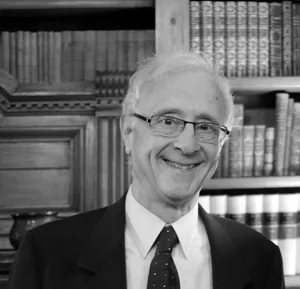
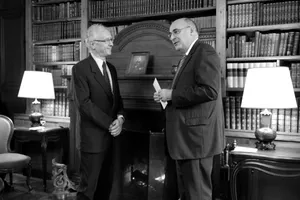
The tenth Prix Guizot of the Calvados General Council was awarded this autumn at Le Val-Richer, François Guizot’s former home, to Pierre Manent, for his two books:
Les métamorphoses de la Cité. Essai sur la dynamique de l’Occident [Metamorphoses of the City: On the Western Dynamic]
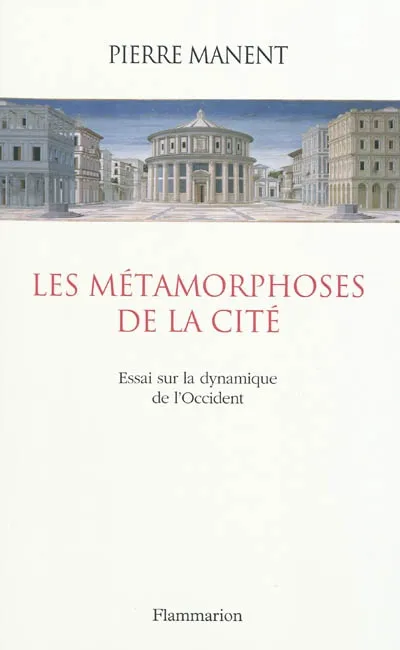
The purpose of this book is to present an interpretation of the history of the West, more precisely a political interpretation of the permanent revolution that has characterised the West. My thesis is as follows: the city is the primary source of Western development. Before this invention, men lived according to the relatively static order of families, still prevalent in many parts of the world. With the city, humanity enters that new element, the political, understood as the government of the common thing, and the history of the West then becomes the history of its four great political forms: the city, then, followed by the empire, the Church and the nation. This succession is not only chronological; it is also causal. Each new form results from the previous one, which, having exhausted its possibilities, gives rise to the next. Thus the city, deploying its energies to the point of exhausting itself in internal strife and foreign wars, gives birth to the Western empire – first that of Alexander, then that of Rome. Thus the Church, as a universal community, takes over from the empire, which proved unable to preserve the unity it had promised. For much of its history the West would remain uncertain of its political form, hesitating between the city, the empire and the Church, until the political form was devised that would at last allow Europeans to govern themselves rationally: the nation. But this form in turn destroyed itself in the “hyperbolic” wars of the twentieth century, and today we are searching for a new political form. This study seeks to retrace the political, but also the intellectual and religious, history of the West by constantly relating it to the political problem par excellence: how are we to govern ourselves? This reasoned history of political forms is therefore also an inquiry in political philosophy. © Source: Flammarion and Le regard politique
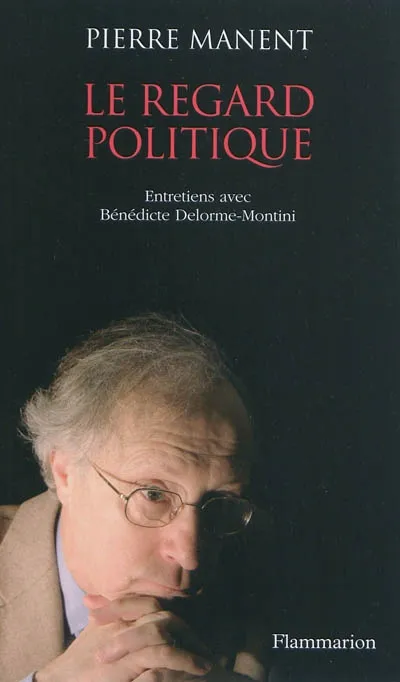
“Today, the human faculty that wins all the approval is the imagination. Now, I have no imagination; I am not an artist and I have no ambition to create. On the other hand, I would like to understand. Understand what? Understand what is. Yet understanding what is hardly motivates people today. Rousseau, a great master of the Moderns in this respect, said: ‘Nothing is beautiful but what is not.’ Basically, for me it is the opposite: I am interested only in what is. And that is perhaps why, at least since I reached maturity, I have never been on the left: the left prefers to imagine a society that does not exist, and I have always found the society that is more interesting than the society that might be.” For some thirty years, Pierre Manent has been ploughing a furrow in the French intellectual landscape that is as original as it is discreet. These conversations seek to retrace its course and its stages: an early passion for politics, awakened by a Communist father; the discovery of the Catholic religion in Louis Jugnet’s khâgne in Toulouse; entry to the École normale supérieure and the choice of political philosophy; the decisive encounter with Raymond Aron; the founding of the journal Commentaire… The distinctive features of a personal approach thus come to light: tireless reading of the great authors, the conviction that a political science remains possible in the age of relativism, and finally a certain “political gaze” that makes the contemporary world intelligible. These conversations are a lively introduction to Pierre Manent’s work, and in particular to Les métamorphoses de la Cité, published at the same time. The two books share, in short, the same ambition: “All our history, unfolding from our political nature – that is what I would like to show and make understood.” © Source: Flammarion

Speech by Jean-Claude Casanova
Members of the jury
Gabriel de Broglie
Chancellor of the Institut de France and honorary Conseiller d’État. His works include a biography of Guizot published in 1990.
Jean-Claude Casanova, President of the jury
Member of the Institut de France (Académie des sciences morales et politiques), director of the journal Commentaire, and president of the Fondation nationale des sciences politiques.
Benedetta Craveri
Professor of French language and literature at the Suor Orsola Benincasa University in Naples, member of the Board of Directors of the Benedetto Croce Foundation and a specialist in the eighteenth century, Benedetta Craveri is the author of several books, including L’âge de la conversation [The Age of Conversation], published in France by Gallimard (2002), reissued in the Tel series and translated into several languages.
Olivier Dumoulin
Holder of the agrégation in history and professor of contemporary history at the University of Caen. Author of several works on the social and intellectual history of historiographical practice in France in the nineteenth and twentieth centuries
Patrice Gueniffey
Directeur d’études at the École des hautes études en sciences sociales (EHESS) and director of the Centre Raymond Aron, he is the author of numerous publications, including Le Nombre et la raison. La Révolution française et les élections [Numbers and Reason: The French Revolution and Elections] and Le Dix-huit Brumaire [The Eighteenth Brumaire] (Gallimard, 2008).
Claude Habib
Holder of the agrégation in modern literature, professor at the University of Paris III and a specialist in eighteenth-century literature, Claude Habib has published several essays, including Le consentement amoureux [Consent in Love] (Études, 2001) and Galanterie française [French Gallantry] (Gallimard, 2006).
Sudhir Hazareesingh
An English historian, professor of politics at the University of Oxford (Balliol College) and a specialist in France, he has written several books on nineteenth-century French history, including La légende de Napoléon [The Legend of Napoleon], which won the Fondation Napoléon History Prize in 2006, La Saint-Napoléon [The Saint-Napoleon] (Tallandier, 2008) and Le mythe gaullien [In the Shadow of the General] (Gallimard, 2010).
Georges de Ménil
A descendant of François Guizot, professor of economics at Princeton University (1970-1974) and directeur d’études at the École des hautes études en sciences sociales. Holds dual French and American nationality. Author of Common Sense. Pour débloquer la société française [Common Sense: Unblocking French Society] (2007).
Mona Ozouf
A research director at the CNRS, Mona Ozouf has written many books, including Les aveux du roman. Le XIXe siècle entre Ancien Régime et Révolution [The Novel’s Confessions: The Nineteenth Century between the Ancien Régime and the Revolution], for which she received the Prix Guizot in 2002. She has published several works in collaboration, first with her husband, Jacques Ozouf, and then with François Furet. She writes for Le Nouvel Observateur and Le Débat.
Dominique Pain
Representative of the Calvados General Council, where he is Director of Heritage.
Philippe Raynaud
Holder of the agrégation in philosophy and in political science, professor of political philosophy at the University of Paris II, the EHESS and the Institut d’études politiques. Member of the Institut universitaire de France, co-author and co-editor of the Dictionnaire de philosophie politique [Dictionary of Political Philosophy], author of Max Weber et les dilemmes de la raison moderne [Max Weber and the Dilemmas of Modern Reason] (PUF, 1996) and, more recently, Trois révolutions de la liberté : Angleterre, États-Unis, France [Three Revolutions of Liberty: England, the United States, France] (PUF, 2009).
Georges-Henri Soutou
A member of the Institut de France (Académie des sciences morales et politiques), professor of contemporary history at the University of Paris IV and the Institut d’études politiques, and a specialist in twentieth-century international relations, he is the author of several books, including La guerre de cinquante ans [The Fifty Years’ War] (Fayard, 2001).
Laurent Theis
Holder of the agrégation in history, secrétaire des débats at the National Assembly (1983-2004), honorary president of the Société de l’histoire du protestantisme français, contributor to the culture section of Le Point, literary adviser at Perrin and author of several books on the Middle Ages, he published a biography of Guizot in 2008 (Fayard).