Guizot and slavery
Article by Jean Bergeret (2020)
Historical context
“It was neither economic factors nor the resistance of the slaves themselves that brought about the final abolition of slavery in the old French colonies, but rather the development, during the July Monarchy, of an abolitionist culture that achieved its aims as soon as the Revolution of 1848 had overthrown the Orleanist regime.
Cautious and gradualist during the 1830s, the French abolitionist movement began to turn towards immediatism in the 1840s, when it became clear that the government would allow only a very distant emancipation, and was finally able to free the 250,000 slaves in the French colonies after the revolution had swept away the monarchy.”
Source:
Jennings, Lawrence C. “Le second mouvement pour l’abolition de l’esclavage colonial français”. In: Outre-mers, vol. 89, no. 336-337, second half of 2002. Traites et esclavages : vieux problèmes, nouvelles perspectives ?, pp. 177-191.
“Before the Revolution broke out in France, England and France both engaged in the slave trade. At the beginning of the nineteenth century, England, having become abolitionist, abolished the trade in 1807 and then slavery in 1833. In France, attitudes changed more slowly; although slavery had been abolished by the Convention in 1794, Bonaparte restored it in 1802, and implicitly the trade as well. Louis XVIII banned the trade in 1818 but remained in favour of gradual measures; as a result, French shipowners carried on with it. Several abolitionist laws would be needed to discourage this illegal traffic.
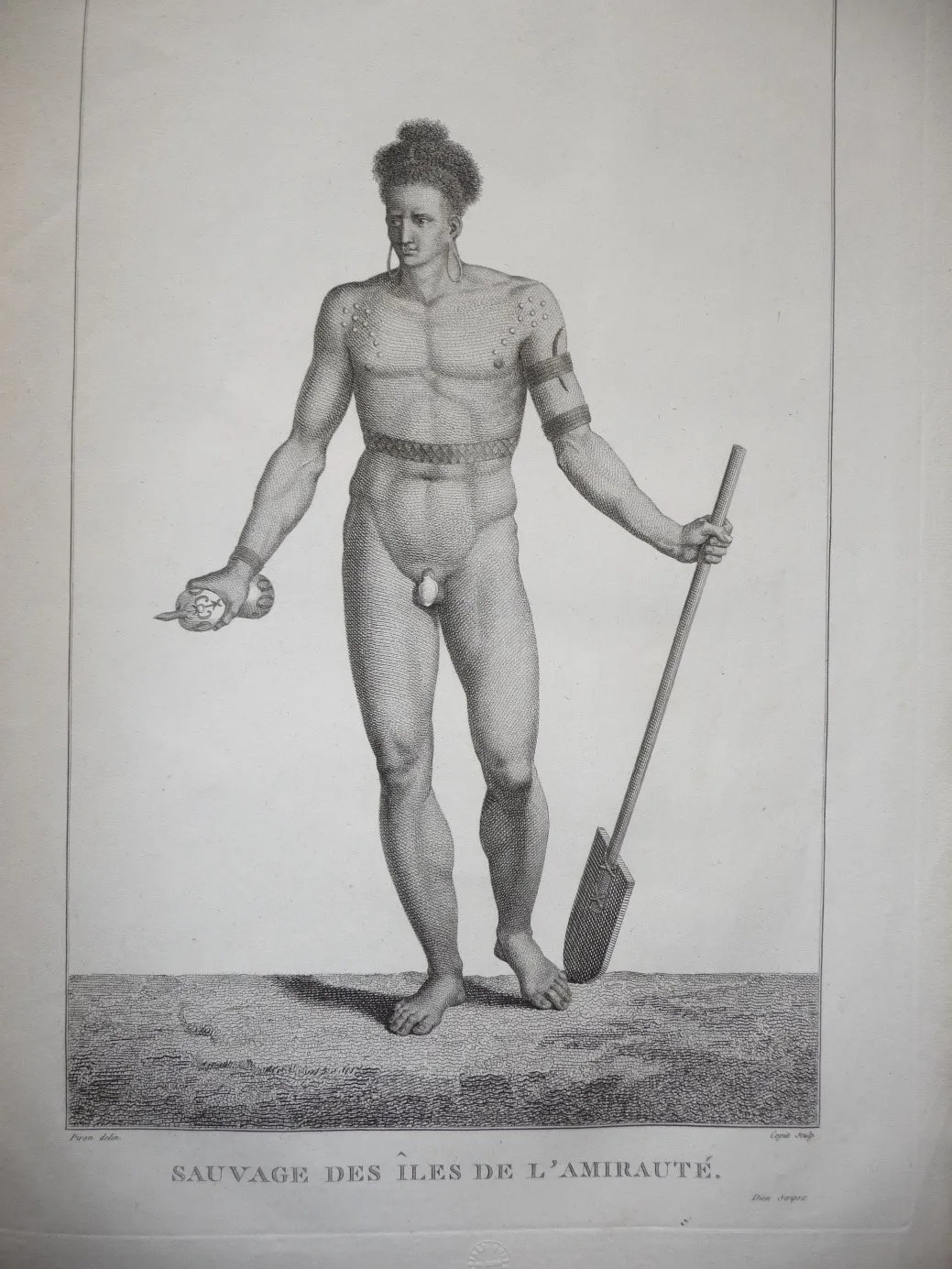
England, the champion of the abolition of the slave trade, led an international campaign to clear the coasts of Africa of slave traders. It concluded conventions with various countries and used the right of search to force ships to comply with them. France, too, gradually organised naval patrols along the coasts of Africa.
Shortly after Louis-Philippe’s accession, a bilateral convention was concluded with England to coordinate the surveillance of the coasts of Africa through a reciprocal right of search (1831 and 1833). France was the only country to take part with its navy in suppressing the slave trade. England’s ships, operating from Sierra Leone, deployed to monitor the slave-trading centres of the Bight of Benin and the Gulf of Guinea. The French ships were based at Saint-Louis in Senegal and at Gorée. Mixed commissions were responsible for judging, without appeal, the slavers seized by the suppression patrols. This concerted action led to a marked decline in the slave trade from 1840 onwards.
Text by Luce-Marie Albigès, April 2007. From the website L’Histoire par l’image.
In France
A Society for the Abolition of Slavery was founded in 1834. It was dissolved in 1848, when slavery was abolished in France. Its founding members were friends of Guizot’s: Victor de Broglie, Charles de Rémusat, Agénor de Gasparin and others. Guizot himself was not a member, nor, it seems, was he among its associate members.
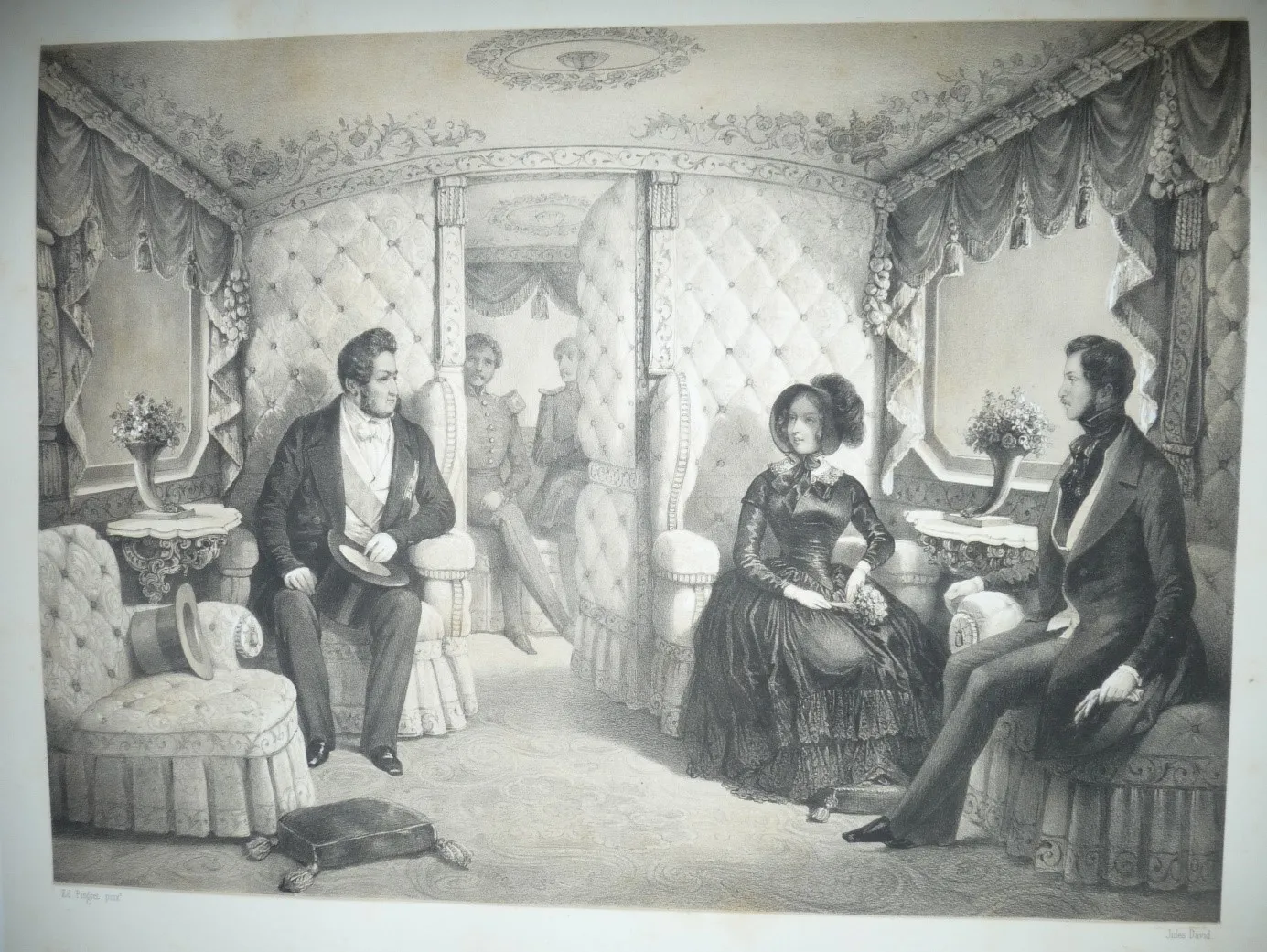
But on 13 February 1838, after many unsuccessful attempts by the abolitionists, the Chamber of Deputies debated a new proposal, and Guizot chaired the committee responsible for examining it.
Charles de Rémusat presented the committee’s report to the Chamber of Deputies on 18 June 1838. But instead of an abolition applying only to children yet to be born, which would lead to a slow abolition and give rise to “envious rivalries”, the committee, after recalling that there were 258,956 slaves in the French colonies, stated that it wished for a mass emancipation; it proposed, however, to wait until 1840 in order to judge the British experiment fully, and stated that in the meantime preparatory measures for emancipation should be voted (the slaves’ right to savings, self-purchase, religious education).
The King dissolved the Chamber in 1839. The bill came to nothing.
First International Congress for the Abolition of Slavery
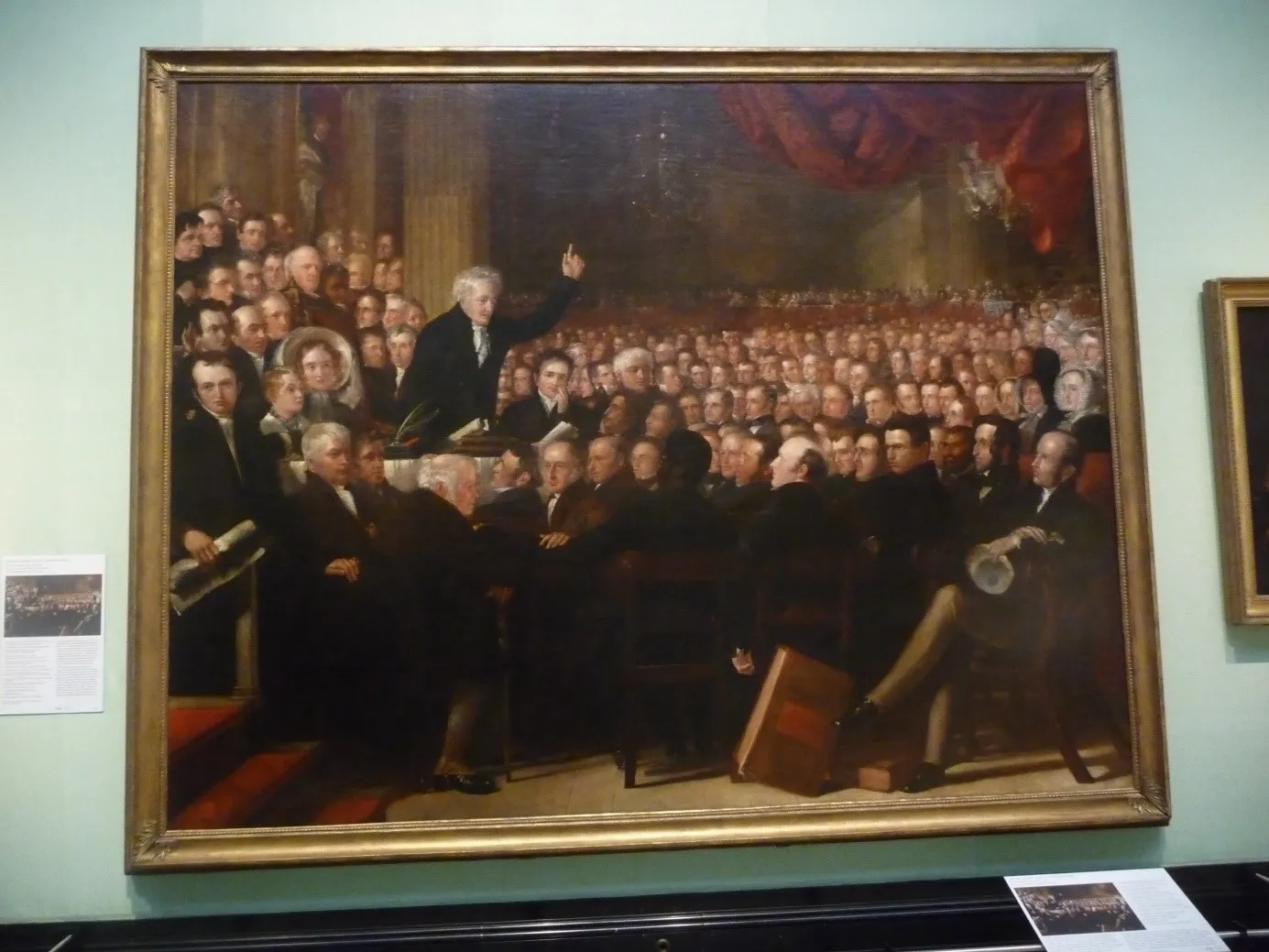
Among those attending this convention was François-André Isambert, a member of the French Society for the Abolition of Slavery:
“When M. Isambert entered the hall, accompanied by M. Dussailly and M. Hauré, members of the French Society, he came to take his place to the right of the chair reserved for the president. The French delegation was greeted with loud acclamations. The same happened when the French ambassador, M. Guizot, entered. Beside the French deputies sat the Duchess of Sutherland; H.R.H. the Duke of Sussex and Mr O’Connell were greeted with thunderous applause.”
The July Monarchy prevaricated over the abolition of slavery, despite repeated appeals from the French Society. Abolition was finally decreed by a provisional government of eleven members, five of whom belonged to the French Society for the Abolition of Slavery: François Arago, Adolphe Crémieux, Alphonse de Lamartine, Louis Blanc and Alexandre Ledru-Rollin.
Guizot’s Role
Guizot was opposed to slavery.
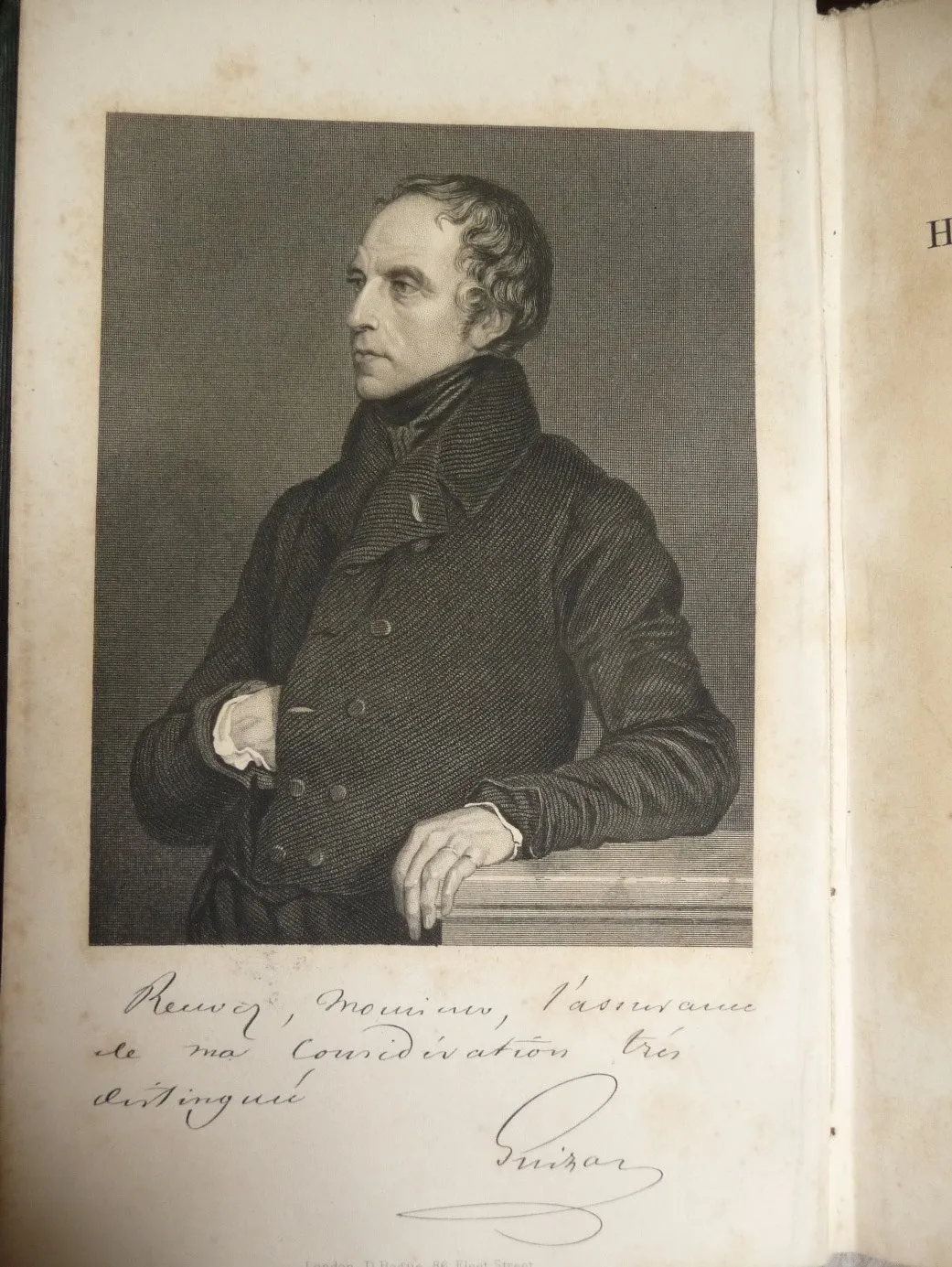
“Guizot was a member of the Société de la morale chrétienne, ‘a society in which Protestants are numerous and to which the flower of the liberal opposition belongs, [is] philosophical and philanthropic in purpose, at the forefront of the struggle against the death penalty for political offences and against the slave trade, for the improvement of prison conditions and for the emancipation of the Greeks – all convictions to which Guizot would always remain attached …’ Guizot’s main contribution seems to have consisted of sustained efforts, when he was ambassador to Great Britain, to secure the signing of an international treaty authorising the boarding of vessels belonging to the participating nations in order to check that they were not carrying a human cargo.
During debates in the Chamber of Deputies in 1841, Guizot ardently defended the treaty to be signed between H.M. the King of the French and H.M. the Queen of the United Kingdom of Great Britain and Ireland, the two countries undertaking to continue to prohibit … any slave trade in the colonies they possessed.
His talents as a negotiator and orator prepared the ground for the final abolition of slavery in the French colonies in 1848, for which the chief credit is given to Schœlcher. François Guizot’s hope that his name would be associated with all those who fought for the abolition of slavery and the slave trade has so far been disappointed.”
Source: guizot.com