The entente cordiale
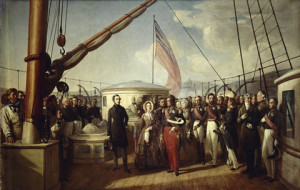
The first «entente cordiale» between France and England took shape with a highly symbolic gesture: Queen Victoria's visit to King Louis-Philippe between 2 and 7 September 1843, at the Château d'Eu in Normandy. It was the first time since Henry VIII that a British sovereign had visited France. This friendly event was all the more impressive given that, three years earlier, the two countries had been on the brink of confrontation over the question of the Orient, and strong resentment had ensued in public opinion on both sides of the Channel. The appointment of a new government on 29 October 1840, with François Guizot as Foreign Minister, was seen as a first sign of appeasement. [read more]
Public education
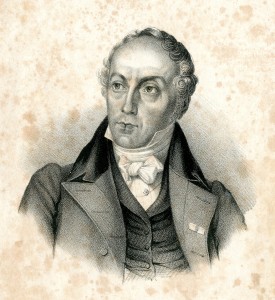
When François Guizot became the seventh Minister of Public Education under the July Monarchy on 11 October 1832, he had long been a recognised specialist in educational issues. Since 1812, he had been Professor of Modern History at the Faculty of Letters in Paris, and even his most resolute opponents agree that he was the greatest history teacher in France in the early nineteenth century. In addition, with his future wife Pauline de Meulan, he founded in 1811 and wrote for three years the Annals of Education, This is a monthly magazine for families and teachers who want to find out about ideas, methods and books that will help them to successfully educate their children and pupils. [read more]
Heritage policy
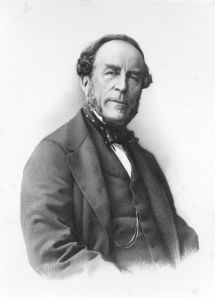
As soon as he entered government in August 1830, Guizot set about rooting the new regime in the continuity of national history, in order to strengthen its legitimacy. In his eyes, history could be a powerful agent of social cohesion, fuelling a need for collective pride by showing that France had come from very far away. His universally recognised ideas and knowledge as a historian put him in a good position to develop a kind of heritage policy, based on the idea expressed by him as early as 1828 that «it is a serious disorder and a great weakening of a nation to forget and disdain the past». From then on, the management of national memory became a matter for government. [read more]