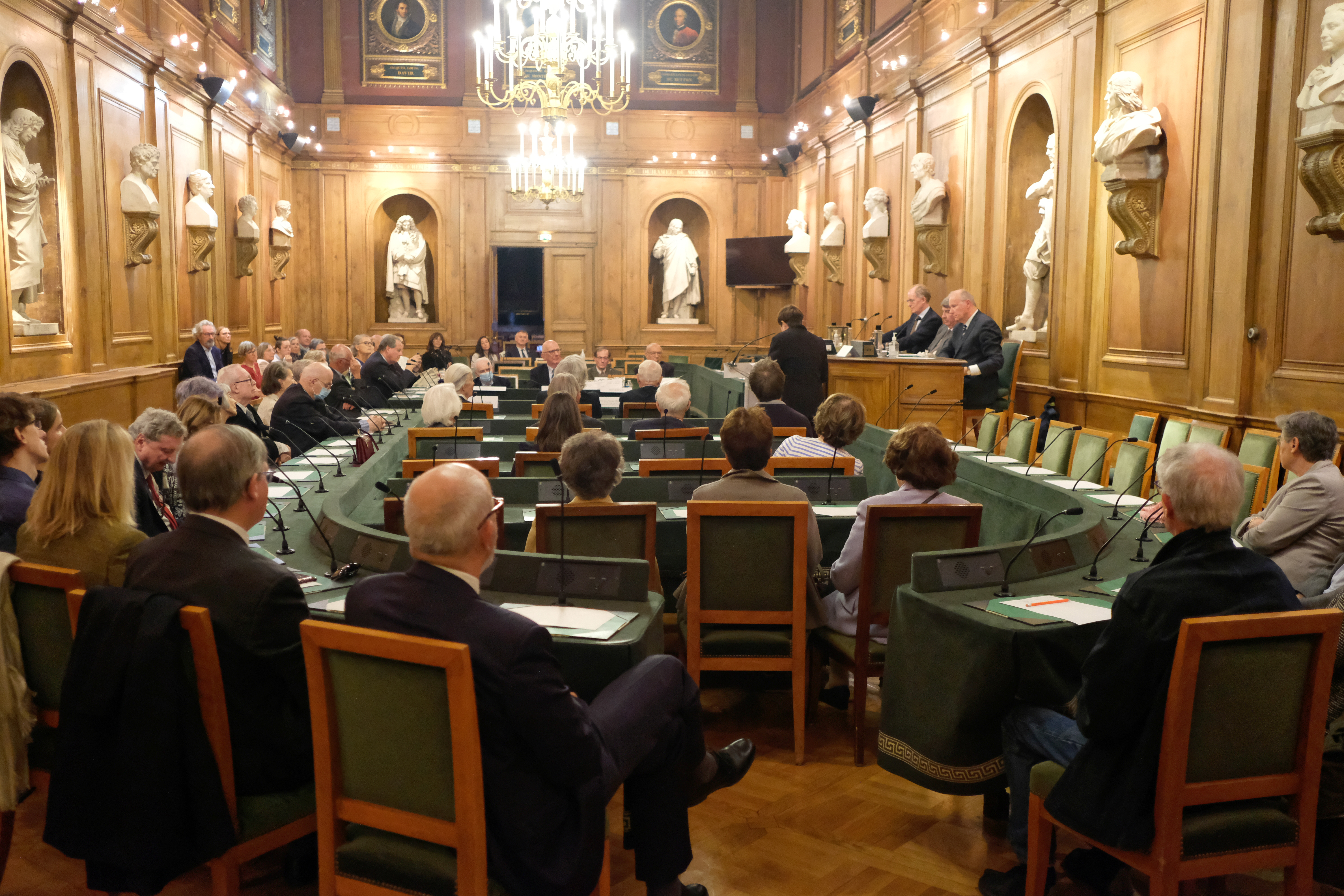
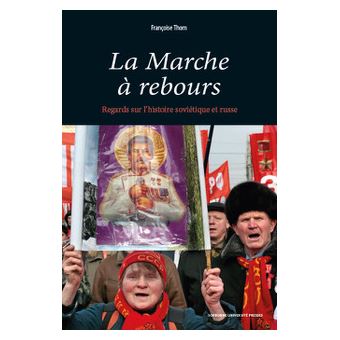
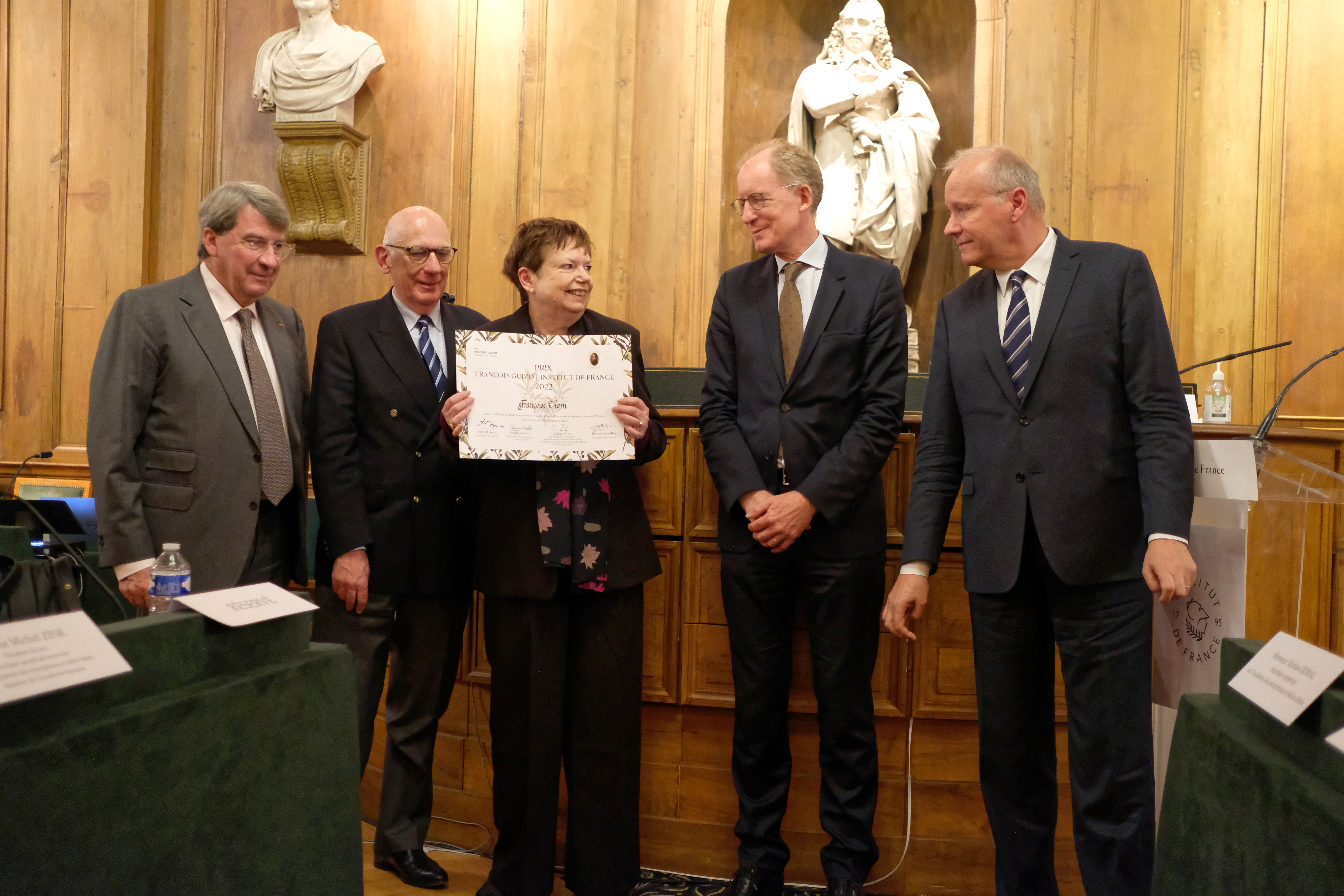
Le 4 octobre 2022 à l’Institut de France, le Prix François Guizot-Institut de France a été décerné à Françoise Thom pour son ouvrage :
La Marche à rebours, Regards sur l'Histoire soviétique et russe, Sorbonne Université Presses.
What was the Soviet regime, which disappeared in 1991-1992 in the great earthquake of the twentieth century, the aftershocks of which are still being felt today? Was it a political UFO, something hitherto unknown in the human order, as experienced by contemporaries who retained a free spirit? Or a pure product of Russian history, with all its burdens and ruts? Because of the secrecy surrounding the Kremlin, the Soviet regime has long seemed like a black box.
The declassification of numerous archives on the Communist world from the Gorbachev period onwards has changed all that. This book bears the mark of the thirst for knowledge that has seized those who, for many years, had been reduced to studying the USSR by interpreting rare clues. It deals with the most diverse aspects of the history of the USSR: the originality of a foreign policy entirely possessed by an ideological project, at once utopian and utterly cynical, yet supremely effective; the role of the state security services; the use of crises in the strengthening of power; the shock of the real war, the German attack of June 1941, in a state that had been waging an offensive against the whole world from the outset; the impact of the clan struggle within the ruling core, an essential factor in the regime's evolution; the problem of succession in a de-institutionalised State/Party.
Paradoxically, the evolution of post-communist Russia, which is the subject of the third part of this book, has shed new light on the history of the USSR and the Russia of the Tsars. It reveals continuities that had been masked by the radical novelty of Lenin's regime. It is now possible to think about Russia over the long term - and this is the only approach that will give us a better understanding of a world so different from our own, whose shadow continues to extend over Europe.
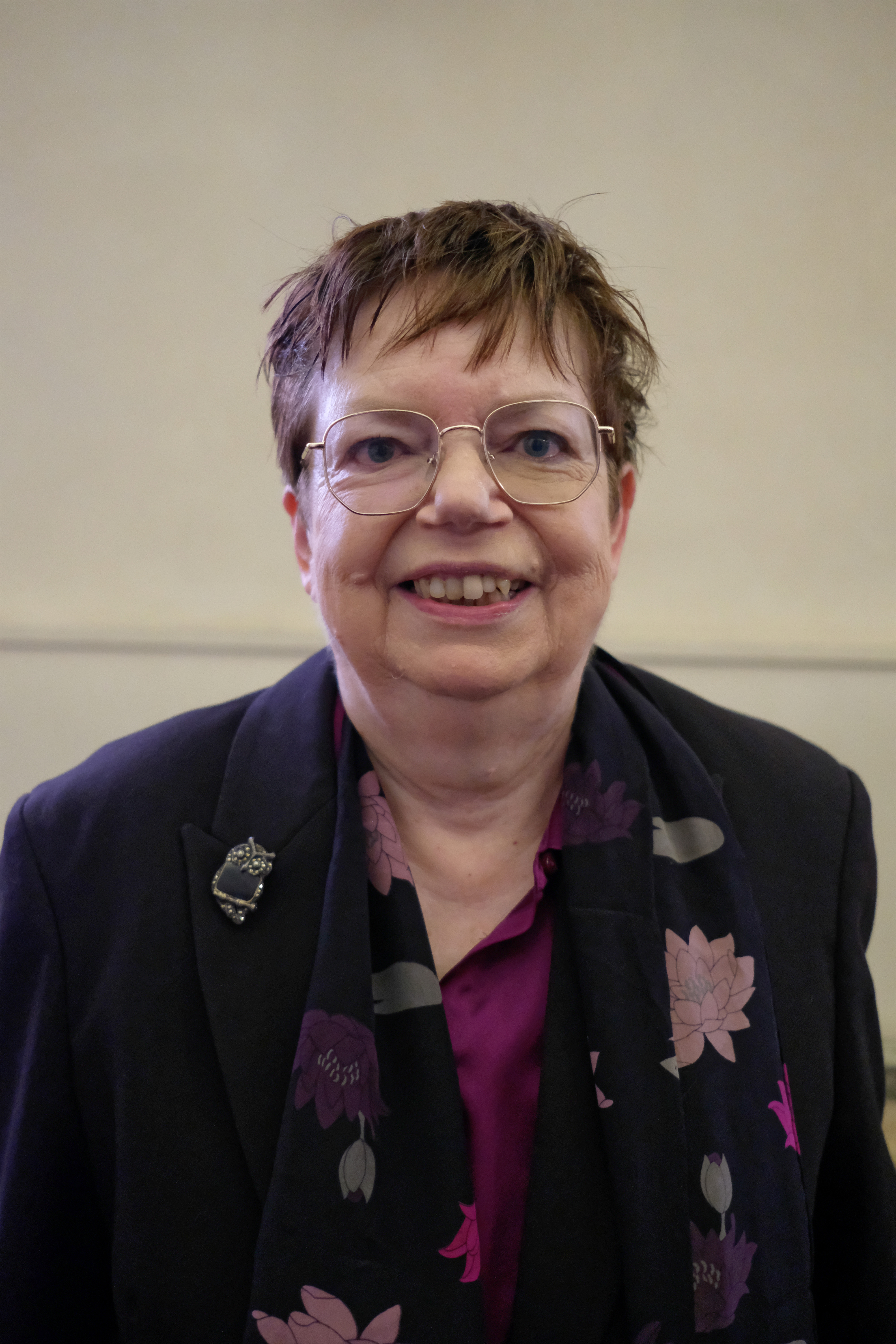
Françoise Thom, who holds an agrégation in Russian, is an emeritus lecturer (HDR) in contemporary history at Sorbonne University.
A specialist on Russia, her publications include Le Moment Gorbatchev (Hachette Pluriel, 1989), Les Fins du communisme (Critérion, 1994), a critical edition of Sergo Beria's memoirs (Plon/Criterion, 1999) and «La Russie d'Eltsine à Poutine», a postface to Nicholas V.'s Histoire de la Russie.
Riasanovsky (Robert Laffont, 2014)

Read the speech by Xavier Darcos, Chancellor of the University of Paris.‘Institut de France
Read the speech by Stéphane Coste, descendant of François Guizot and President of the François Guizot Association
Read the speech by Patrice Gueniffey, vice-president of the jury
Read the speech by Françoise Thom, winner of the Prix Guizot-Institut de France 2022
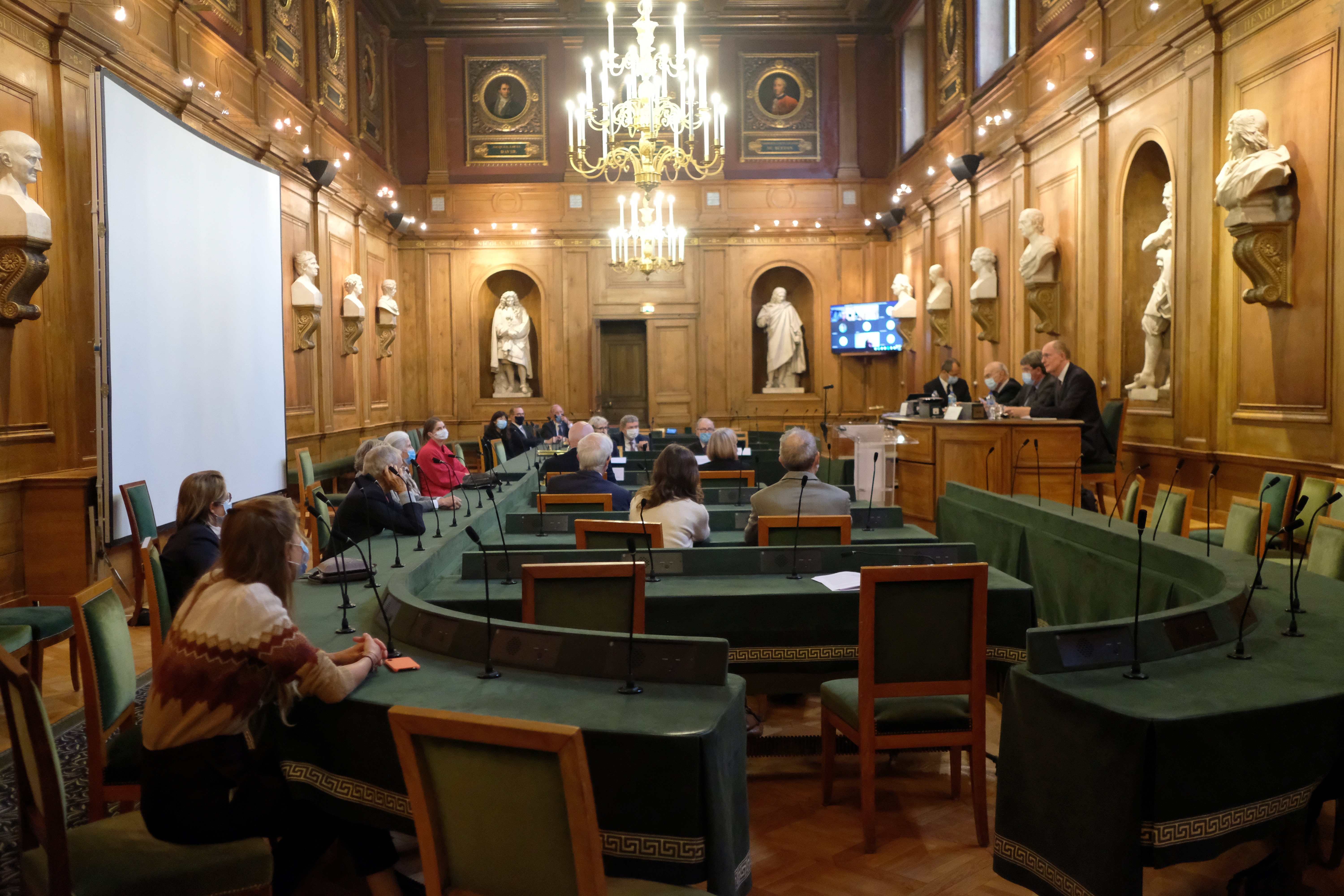
On October 4, 2022 the François Guizot-Institut de France Prize was awarded to Françoise Thom for her book entitled:
La Marche à rebours, Regards sur l’histoire soviétique et russe (The Backward march, a look at Soviet and Russian history), published in French by Sorbonne Université Presses .
What was the Soviet regime, which disappeared in 1991-1992, in the great earthquake of the twentieth century, the aftershocks of which are still being felt today? Was it a political UFO, something hitherto unknown in the human order, as experienced by contemporaries who had kept their minds free? Or a pure product of Russian history, of its burdens and ruts?
Because of the secrecy surrounding the Kremlin, the Soviet regime has long appeared as a black box.
The declassification of numerous archives of the communist world from the Gorbachev period on changed all that. The present book bears the mark of the thirst for knowledge that has seized those who for many years had been reduced to studying the USSR by interpreting rare clues. It addresses the most diverse aspects of the history of the USSR: the originality of a foreign policy entirely possessed by an ideological project, both utopian and totally cynical, supremely effective; the role of the state security services; the use of crises in the strengthening of power; the shock of the real war, the German attack of June 1941, in a state that had been leading an offensive against the whole world from the beginning; the impact of the clan struggle within the ruling core, an essential factor in the evolution of the regime; the problem of succession in a deinstitutionalized State/Party.
Paradoxically, the evolution of post-communist Russia, which is the subject of the third part of this book, has shed new light on the history of the USSR and the Russia of the Tsars. It reveals continuities that the radical novelty of Lenin’s regime had masked. It is now possible to think about Russia in the long term – and this is the only approach that allows us to better understand this world so different from ours, whose shadow continues to extend over Europe.
Françoise Thom, an associate professor of Russian, is an emeritus lecturer (HDR) in contemporary history at Sorbonne University.
A specialist in Russia, she has published, among other things, Le Moment Gorbatchev (Hachette Pluriel, 1989), Les Fins du communisme (Critérion, 1994), a critical edition of Sergo Beria’s memoirs (Plon/Criterion, 1999), as well as « La Russie d’Eltsine à Poutine », as an afterword to the Histoire de la Russie by Nicholas V. Riasanovsky (Robert Laffont, 2014)
Read Xavier Darcos’ speech, chancelier de l’Institut de France
Read Stéphane Coste’s speech, descendant from François Guizot and president from the association François Guizot
Read Patrice Gueniffey’s speech, vice-president of the jury
Read Françoise Thom’s speech, laureate from the Guizot-Institut de France 2022 prize